

Winter Steelhead Fishing on the Feather River
Winter steelhead fishing on the Feather River is a different game. Fewer anglers, colder mornings, and fish that reward good decisions over blind optimism. This time of year, success comes from understanding the runs, slowing everything down, and fishing with intention!
Steelhead Runs in Winter
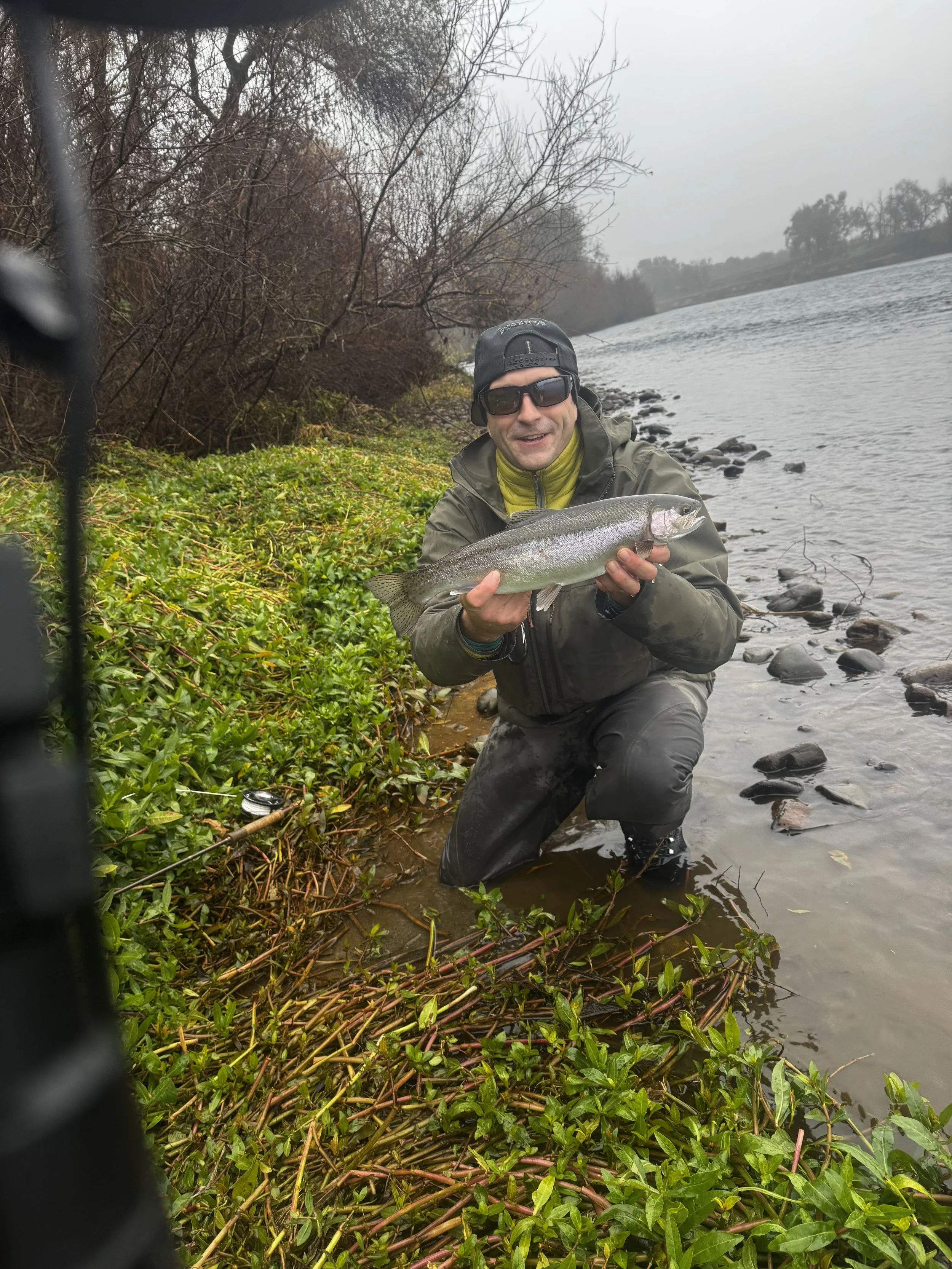
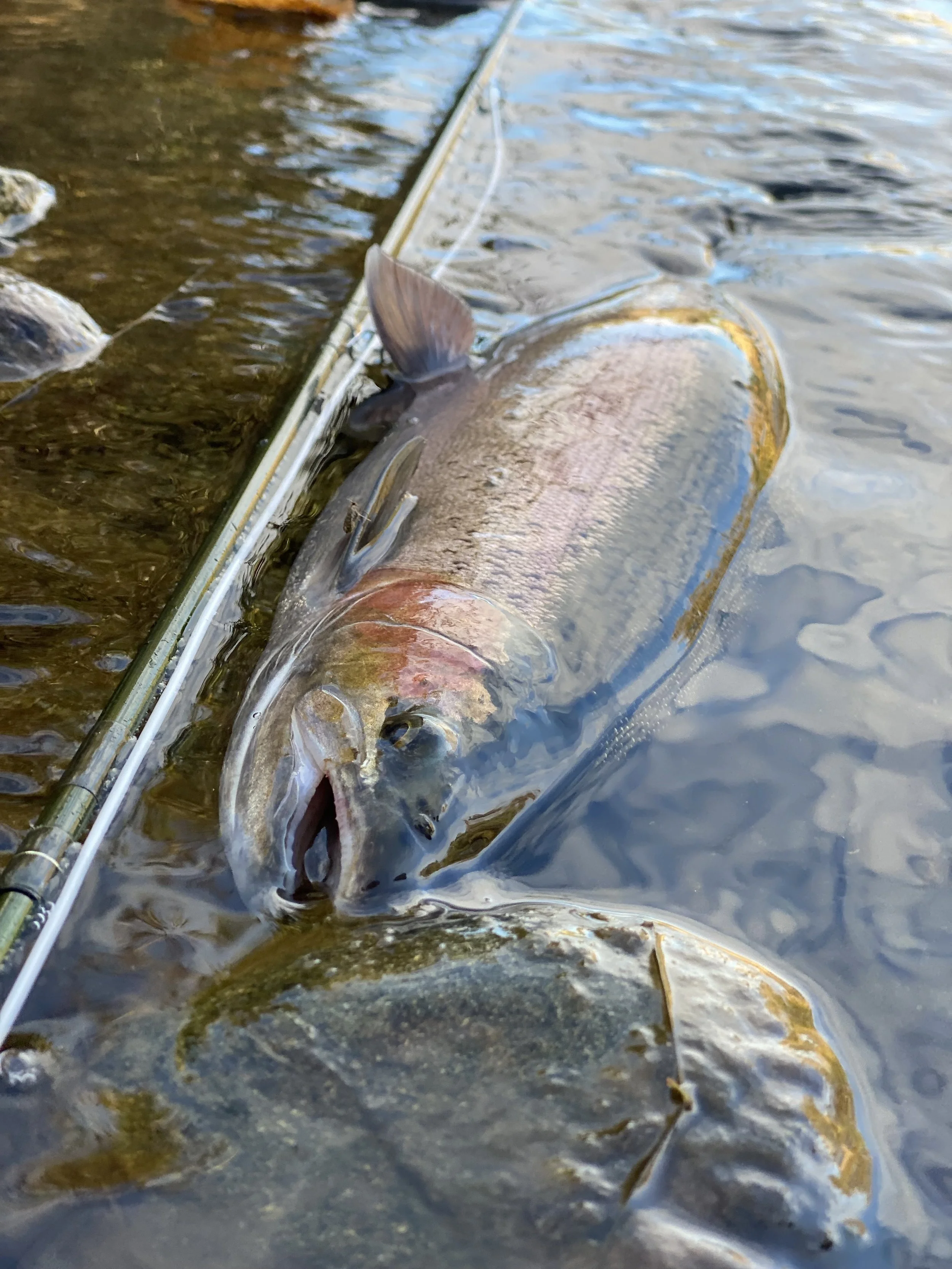
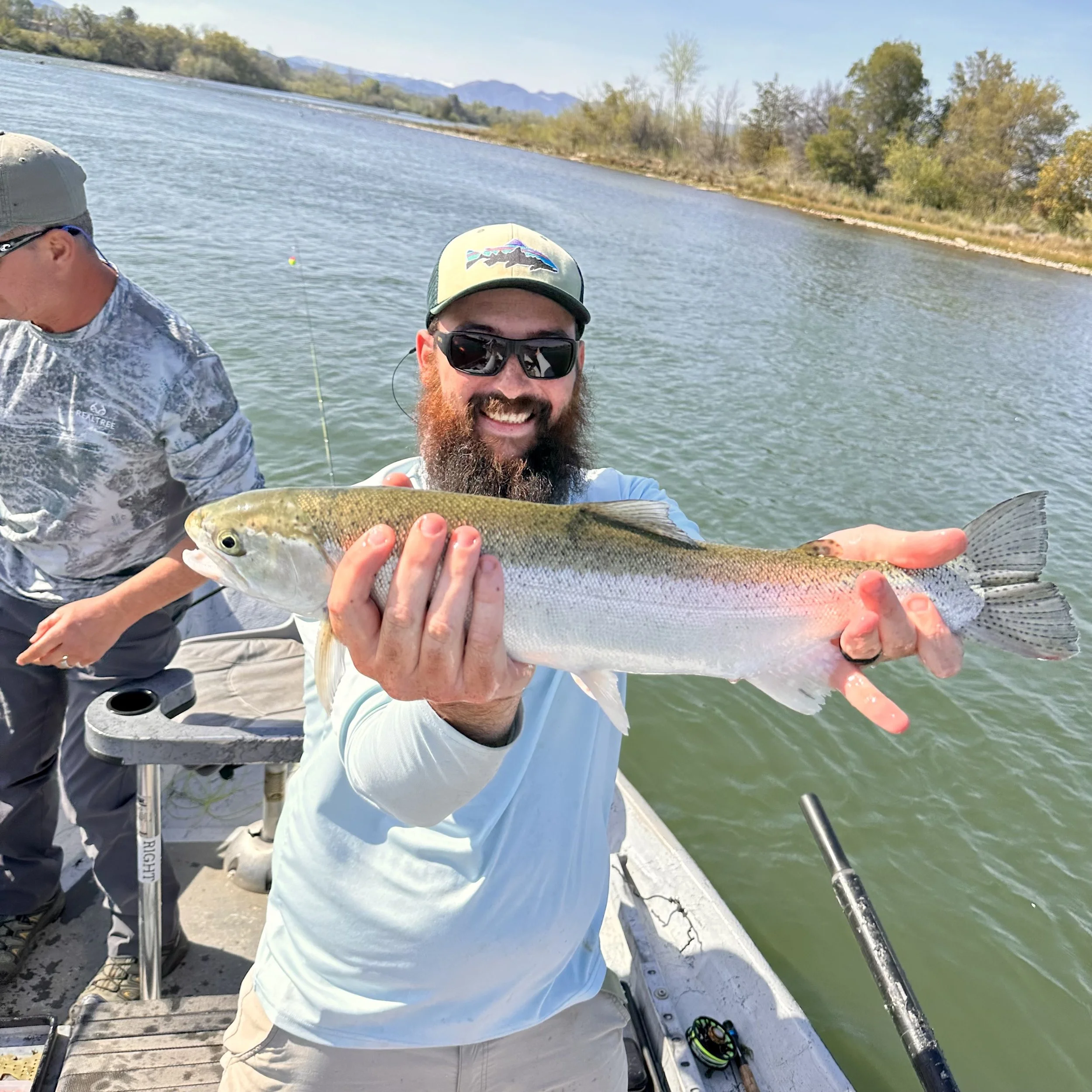
During winter, the Feather can hold a mix of steelhead. You will encounter lingering fall-run fish waiting to spawn or the occasional early spring-run, but the primary target right now is the winter-run steelhead and like always they are few and far between.
Even the biggest steelhead on the Feather are typically smaller than their coastal-range cousins, like those found on the Eel River. Coastal systems produce true giants. That said, Feather River steelhead are strong, aggressive, and live in technical water that demands good presentation. Pound for pound, they earn every inch.
Why a Two-Handed Rod Shines in Winter
Winter flows and structure on the Feather are ideal for swinging flies with a two-handed rod. A shorter two-hander offers better line control, efficient casting, and the ability to slow the swing—critical when steelhead aren’t willing to chase far in cold water.
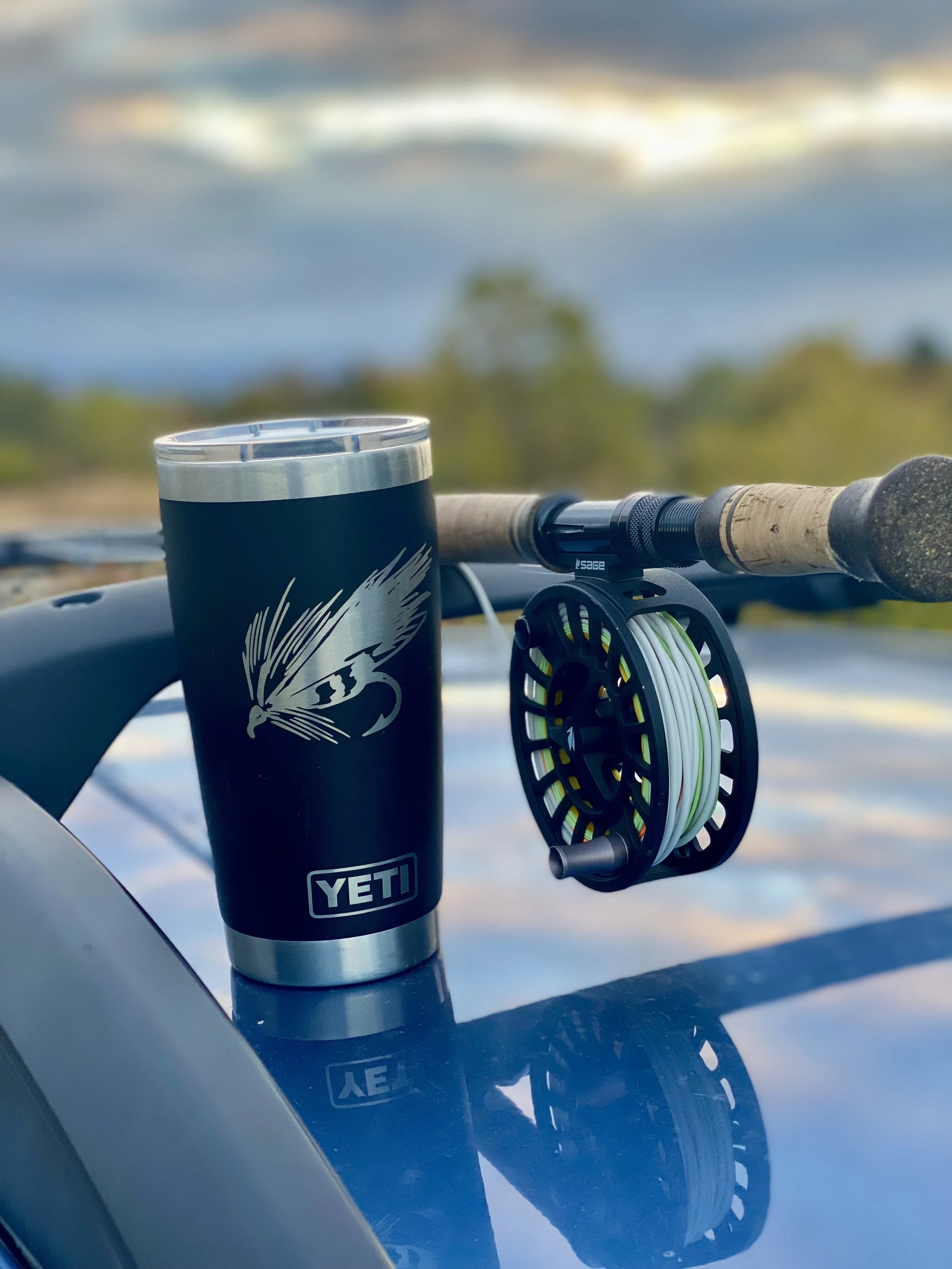
My go-to rod is an 11’6” 6-weight Sage Z-Axis, which balances power and finesse perfectly for winter steelhead.
Is Two-Handed Casting Hard? Not Really.
Two-handed casting can look intimidating, but it’s far simpler than most people think. At its core, Spey casting is just a series of roll casts.
Think of it in three steps:
The first roll cast positions your fly
The second roll cast positions your line
The third cast delivers the fly
That’s it.
If you can roll cast a single-hand rod, you can fish a Spey rod. The rod does the work—you’re just setting things up efficiently.
In reality, there are only two casts you truly need for most winter steelhead situations:
Double Spey
Snap-T
As long as you can perform both casts off of either shoulder, you can effectively fish almost any run on the Feather River. Everything else is just a variation.
My Winter Steelhead Gear Setup
Here’s the setup I fish most of the winter:
Rod: 11’6” 6 wt Sage Z-Axis
Line: RIO Chucker, 420 grain
Sink Tip: 10 feet of T-8
Leader: 3–4 feet of 8–12 lb Maxima
This setup allows for clean casts, controlled swings, and consistent depth control in winter flows.
Fly Selection for Winter Steelhead
I keep fly selection simple and effective:
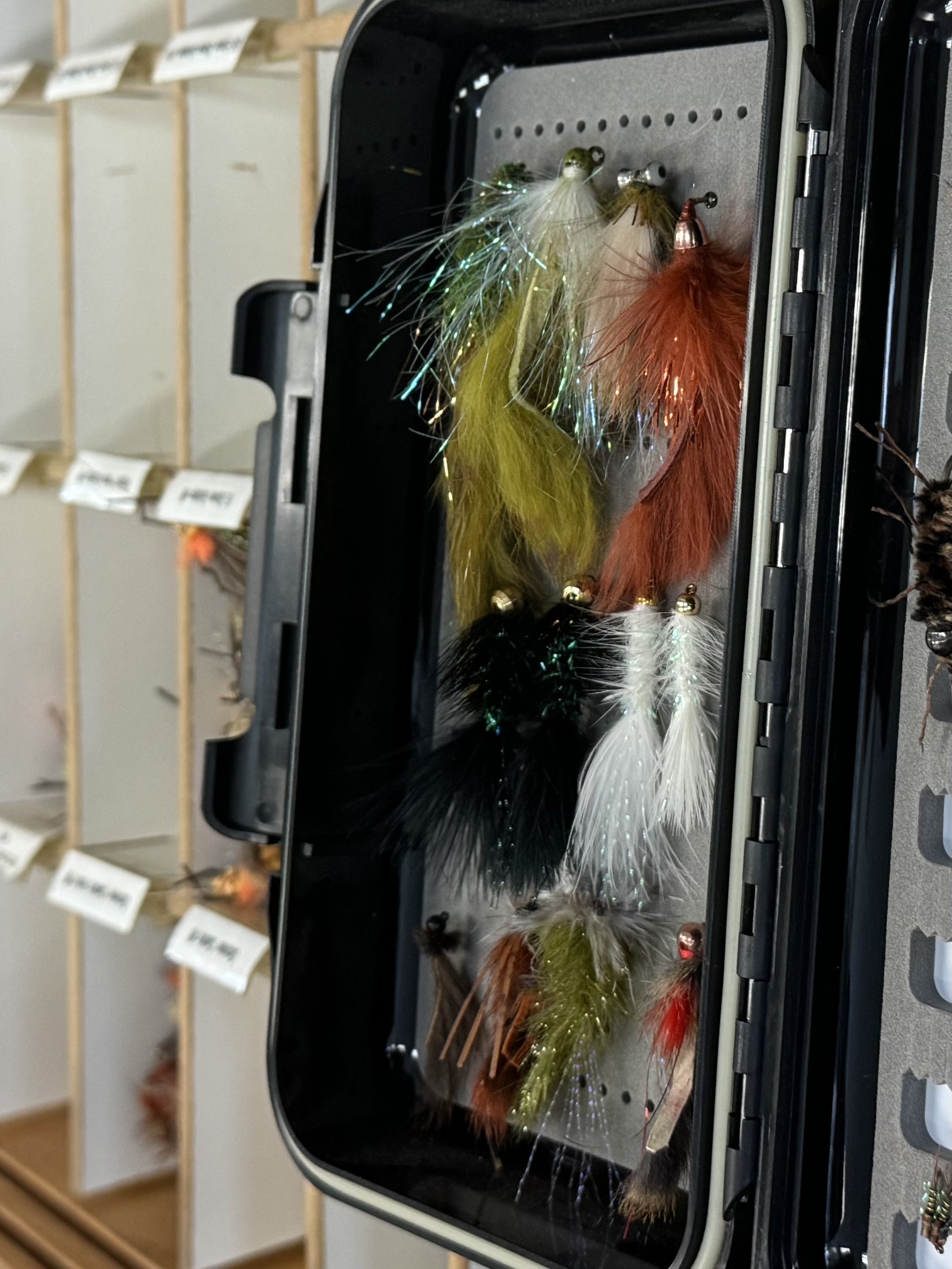
Plain white Woolly Bugger
Hoh-Bo Spey and intruder-style flies
Colors I rely on: purple, green, and chartreuse
Sculpin and leech patterns
Toward the end of December, salmon eggs begin to hatch, and as they develop, alevin patterns become very effective. These can be swung or dead-drifted and often get eaten when nothing else moves fish.
Swinging Tandem Flies
I frequently swing two flies in tandem. A common setup is a streamer up front with a trailer such as:
Alevin
Caddis emerger
Mayfly emerger
I’ve even caught striped bass swinging tandem streamers through seams during other times of year, which reinforces why this approach works year-round. Tandem rigs offer multiple profiles and depths, increasing your odds.
Versatility Matters
Another reason I like this rod and line combo is versatility. I can remove the sink tip, swap to an indicator leader, and go from swinging to nymphing in minutes. If conditions change—or I just get bored—I’m not locked into one style of fishing.
Book a Winter Steelhead Trip or Clinic
If you want to shorten the learning curve, I’m booking winter steelhead trips and two-handed clinics on the Feather River. These trips focus on casting fundamentals, reading winter water, swinging techniques, and adaptable setups, so you leave with skills you can use anywhere.
Reach out anytime to book a trip or clinic.
Every cast is an adventure.